
August 1, 2016
Reflecting on Grain Gathering 2016
I was lucky enough to attend the 6th Annual Grain Gathering for the first time last weekend. It’s a well-organized event bringing together an eclectic mix of makers & dreamers committed to introducing the full nutritive value of grains into our food supply. Approximately 300 Farmers, Millers, Bakers, Restauranteurs, Entrepreneurs - young & old, from around the world, were in attendance this year.
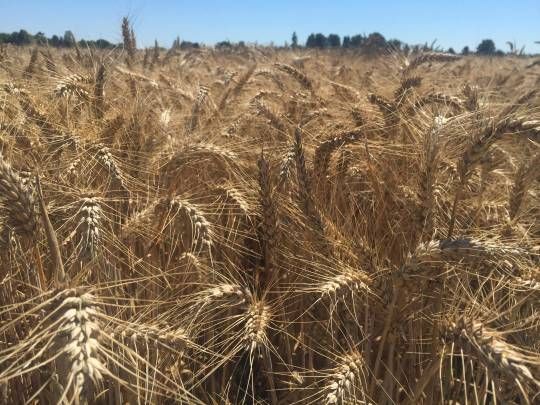
The event occurs on the scenic Washington State University Research campus in Mount Vernon (Skagit Valley). Home to 93,000 acres of farmland, Skagit yields Berries, Potatoes, Apples, Wheat, Rye, Barley etc. of all kinds and from many eras, experimentally and at-scale. The weather at the end of July was pristine - crystal clear skies, and a gentle Sun making conversation easy.
 image
image
Hyper-processed nutritively diluted flour dominates our food supply today. It’s not going to do much for your body, and it will leave you craving more food soon. Minimally processed grains that preserve the germ, endosperm & bran deliver the full complement of macronutrients to your body, leave you feeling fuller for longer, and are tastier to boot. The Grain Gathering is a grass-roots movement to increase adoption of whole grains into our diet, one local community at a time.
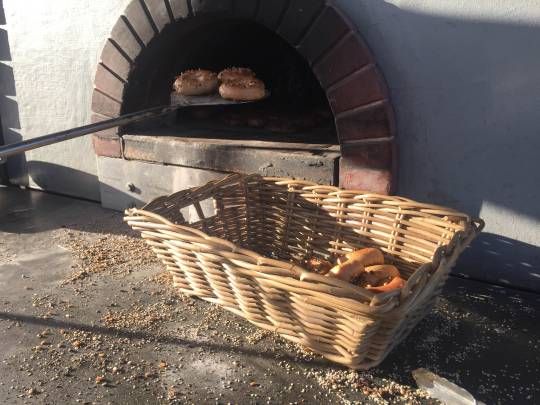
These wood-fired whole grain bagels I helped roll with Jeffrey Hamelman & Mark Doxstader had unrivaled character - take it from someone who’s had the best New York & Montreal have to offer!
 image
image
I attended because we appear to be at a tipping point in this Refined vs. Whole adoption curve. Bakeries today have more discerning consumers to please and there is only so much product innovation left to do with refined grains. Whole grains open up a whole new spectrum of products that have a unique point of view, and deliver health benefits with them. There seems to be strong alignment amongst various stakeholders that makes wider adoption of whole grain products inevitable.
Observations:
- A lot of the bakers I spoke with or listened to seemed to be struggling with locally sourcing & milling of whole grains. They wanted access to a network of producers who could consistently supply them with high quality flour for their products. This is easier said than done. Growing grains appears to be more art than science right now. The same goes for milling. And for roasting. There’s a lot of experimentation before folks get things just right.
My technology background leads me to believe that a network connecting farmers, millers, roasters, bakers, brewers, restauranteurs and other artisans will go a long way to solving these supply issues. Let’s call it GrainSource. GrainSource should allow Bakery X to request “50 pounds of Rye Flour, milled super-fine.” from Supplier Y and have a reputation system that allows them to rate each other.
If the source is flakey, the community-at-large should know. If the Bakery is flakey, same outcome. The bottom line here is that the whole grain supply network needs to self-select for consistency, improve resiliency, increase grain diversity. A successful network will enable Farmers scale up their operations by exposing them to bigger demand curves. Conversely, it will help Bakeries & other artisans deliver more product to their local communities without being as vulnerable to supply disruption.
- A lot remains to be understood with Farming. The same genetic material on the same plot of land will yield differently season-to-season. Resiliency to disease in Area X does not mean resiliency to disease in Area Y. Variabilities in soil composition, weather patterns and nature’s other guiles remain formidable adversaries. There is no immediate solution to this, but can intuit that there is significantly more to learn from the ‘deep quantification’ of farms. The second conclusion one can draw is that locality is a huge component. It matters where a grain comes from — it affects flavor, variety, yield and just about everything else, even with the genetic material being identical.
Top Experiences:
- Meeting an array of people who genuinely want to take whole grains to the next level of adoption. I was impressed with the energy they brought, the sophistication of their palates, their skill, their humility, their dedication, and their noble intentions.
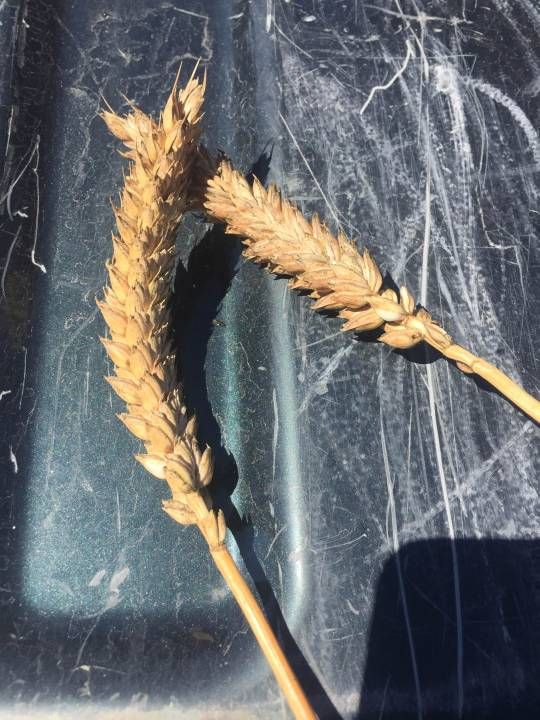
- Touring the WSU research fields with Steve Lyon (Senior Scientific Assistant @ The Bread Lab), with grains from the 1500s and up. Including this line that was first planted in 1776:
 image
image
- Rolling & baking lots of diverse wholegrain bagels with the crew (see above)
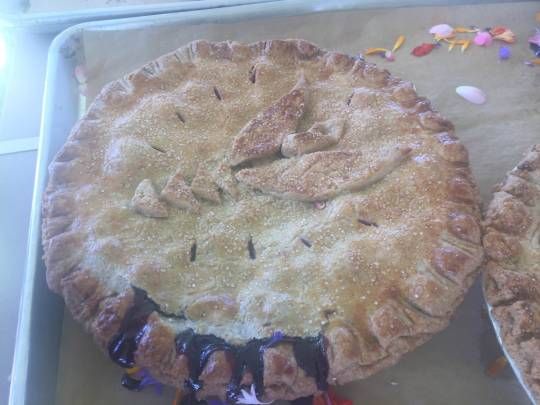
- Baking this insane wholegrain Blueberry+Blackberry Pie with the dedicated & talented Tara Jensen & Co.
 image
image
- Tasting a dark chocolate, olive oil & pernot flatbread that had a pleasantly surprising flavor profile. Megan - if you’re reading this, holler back if you make one of these at your bakery!
- Cross-breeding Barley in a class by Phd. Student Brigid Meints (her research into sustainably producing two-colored Barley is pretty cool).
- Some outrageously good Nectarines, Tomatoes & Plums. Worthy of a mention.
This was an excellent event, and I suspect the energy harvested from it will move the whole grain agenda forward in an impactful way. Huge props to The Bread Lab team (Steve Jones, Wendy Hebb and others) for making it happen - I look forward to GG7!